Dosing Your Grief: Healthy Breaks and the Power of 'Puddle Jumping'
In the challenging landscape of loss, many of us feel pressured to be constantly immersed in our deepest pain—as if taking a break is a sign of avoidance or that our pain is our connection with the person who died. But what if "dosing" your grief—managing the intake of intense emotion—is actually a healthy, necessary form of self-regulation?
I see the benefits of this approach daily in practice. It’s a process distinct from total suppression; it's about conscious, temporary moderation.
The Art of the Emotional Break
When we talk about "dosing" grief, we are recognizing the limits of the human nervous system. As pioneer of loss and death studies Dr. J. William Worden noted in his four tasks of mourning (one of the evidence-based models of grief), grief work is demanding and needs to be balanced with periods of respite. We simply cannot process the full intensity of loss 24/7.
Healthy dosing allows you to:
Prevent Emotional Burnout: Deep sorrow is exhausting. Taking time to focus on daily tasks, hobbies, or light social interaction acts as a crucial energy renewal, allowing you to return to the grief work with more stamina.
Integrate Gradually: Grief is not a switch; it's a dimmer. Dosing allows you to slowly integrate the reality of the loss into your life without being completely overwhelmed or feeling shattered all at once.
From Avoidance to Puddle Jumping
The difference between healthy dosing and harmful avoidance is intentionality.
Avoidance (Suppression): Burying feelings, pretending the loss didn't happen, or using destructive behaviors (like excessive drinking) to numb all emotion. The grief is never acknowledged or addressed.
Dosing (Puddle Jumping): This term is often used in child grief work to describe how children naturally dive into their sorrow (the 'puddle') and then leap out to play, only to return later. Adults can adopt this, too. It means intentionally stepping away from the pain for a planned period—maybe watching a comedy, spending time with friends, or focusing intensely on a project—knowing that you will check back in with your feelings later.
Puddle jumping is an act of agency. It confirms that you are in control of when and how you engage with your pain, rather than letting the pain control you. It’s a rhythmic process of acknowledging the sorrow and choosing joy (or calm) when you need it most.
Give yourself permission to take these necessary breaks. Your strength isn't measured by the depth of your continuous sorrow, but by your capacity to regulate and navigate the waves of loss over time.
If what you've read here resonates, you don't have to keep navigating this alone. I offer a free 15-minute consultation so we can talk about what you're carrying and whether grief therapy might help. There's no pressure and no commitment — just a conversation. Schedule here.

Grief and Holidays
For those of us who are grieving, the holiday season rarely lives up to the picture-perfect ideals seen on cards and screens. Following the death of a loved one, the traditional holiday focus on joy and togetherness can feel incredibly challenging.
It is important to put your feelings into perspective. Holiday pressures are real, causing stress even for those not currently grieving. When you factor in loss, that stress level can skyrocket. Do not judge your own emotions. Whether your loss was recent or long ago, a wide range of emotions—sadness, anger, exhaustion, or even surprising moments of peace—are "normal."
Flexibility and preparation can be helpful tools to navigate the holiday season. You can take control by making specific plans and securing the support you need before the season begins. Here is a link to the Griever’s Bill of Rights from the Heartlight Center that may help you understand and express your needs and hopes.
Also, do your best to prioritize self-care. Your physical well-being is closely tied to your emotional resilience. Make sure to eat regular, nourishing meals, get adequate rest, and avoid using alcohol or other substances to self-medicate or numb your feelings.
The Road Less Traveled: Grieving a Lost Future
Life, in its often-unpredictable way, constantly presents us with a myriad of paths. Each decision we make, each fork in the road we take, inevitably means leaving other paths untrodden. While we often celebrate the journey we embark on, there's a quieter, less acknowledged form of grief that many experience: grieving a lost future, the echo of "what might have been."
This grief is not necessarily about regretting choices, but rather acknowledging the very real sense of loss for a future that, for whatever reason, never materialized. It could be the career path you meticulously planned but had to abandon due to unforeseen circumstances. Perhaps it's the vision of a life with a person who died, or the dream of a particular family dynamic that shifted. It might even be the version of yourself you envisioned becoming, a self that was sidelined by life's detours.
The "road less traveled" often sounds romantic, but sometimes, the pain comes from not taking that road, or having it taken from you. We invest emotions, hopes, and dreams into these imagined futures. They become part of our identity, even before they become reality. When those futures vanish, whether through a breakup, a career setback, a health crisis, or simply the passage of time, the emotional residue can be profound. It’s the mourning of possibilities, the quiet ache for experiences that will now never be.
Allowing yourself to grieve these lost futures is just as important as grieving other losses. It's not a sign of weakness or a failure to accept your current reality (I will write about the importance of acceptance, or more accurately radical acceptance, in a future post). Instead, it's an acknowledgment of your capacity for hope, planning, and love. Give yourself permission to feel whatever emotions may arise - sadness, disappointment, and even the anger that can accompany such a loss. Talk about it if you can, write about it, or simply sit with your emotions.
While the future you envisioned may no longer be, recognizing and honoring that loss can help you move forward, not by forgetting, but by integrating that experience into your life. It clears the space for new possibilities, new dreams, and new futures to emerge. The echo of what might have been doesn't have to be a haunting; it can be a reminder of your incredible capacity to dream and to adapt.

See My Grief
I have written about how our death adverse society may isolate someone who is grieving. This isolation can be especially acute when our loss is not one that is openly acknowledged or socially supported. In those case, we may experience what is known as “disenfranchised grief,” a term coined by grief expert Kenneth J. Doka to describe grief for a loss that society does not grant the same validity or legitimacy as other, more recognized losses (such as the death of a spouse or parent). Because the bereaved person's grief is deemed insignificant or inappropriate by others, they often lack the crucial social support necessary for healthy mourning. This invalidation forces the person to grieve in isolation or silence, which can significantly complicate the grief journey, leading to feelings of isolation, anger, and confusion.
The lack of recognition can stem from the relationship being unrecognized (e.g., an affair), the loss itself being unrecognized (e.g., miscarriage), the griever being considered incapable of grief (e.g., a young child or a person with a cognitive disability), or the way the person died being stigmatized (e.g., suicide or an overdose). The lack of validation inherent in disenfranchised grief can prevent the individual from engaging in necessary grieving rituals and openly expressing their pain. The expectation to "just get over it" or to hide the true source of their distress makes it difficult to process the emotions associated with the loss. A common example is the grief experienced by a co-worker or an ex-spouse after a person's death; since the relationship is not considered "primary family," their sorrow is often overlooked in favor of the immediate next-of-kin, despite the deep bond and history that may have existed.
We often see disenfranchised grief following a death by suicide. For survivors of suicide loss (often called "suicide bereaved"), their grief is often compounded and complicated by a powerful surrounding stigma that minimizes or invalidates their right to mourn openly. This societal judgment, often rooted in historical or religious beliefs that cast the act of suicide as immoral or sinful, can cause the bereaved to feel intense shame, guilt, and isolation. They may hide the true cause of death to avoid judgment, leading to a profound lack of the necessary social support that typically helps individuals process a major loss.
How do we support someone who may be experiencing disenfranchised grief? The single most important thing you can do is acknowledge that their loss is real and their feelings are legitimate, regardless of how society views the situation. Acknowledge and use specific language: Instead of generic "I'm sorry for your loss," use language that recognizes the specific relationship or circumstance. It is also critical to avoid minimizing statements (often used following a miscarriage or stillborn death). Steer clear of trite phrases or comparisons. Your goal is to meet them where they are. Avoid: "At least you can try again," or "It was just an ex, you'll meet someone new." And, finally, check In consistently: Reach out days, weeks, and months later.
Pets and Grief
The bond we share with our pets is one of unconditional love, comfort, and routine. They are family members, confidantes, and constant presences in our lives. When that bond is suddenly broken, the emotional fallout can be devastating, often mirroring the pain experienced after the loss of a human loved one.
It’s crucial to understand that the grief process for a pet is fundamentally similar to any other loss. You may be experiencing a wide range of emotions, including intense sadness, denial, guilt, and anger. The guilt might stem from second-guessing medical decisions or the circumstances of their death, while anger might be directed toward the world for taking them too soon. These turbulent emotions are a normal and natural part of your grief journey.
It is also important to remember that grief is not just emotional; we experience physical changes and our brain struggles to make sense of a loved one’s absence (for a great exploration of grief and biology, I highly recommend Mary-Frances O’Connor’s books, The Grieving Brain and The Grieving Body). Many of my clients report brain fog, challenges with sleep, and fatigue.
The absence of our routines—the morning greeting, the daily walk, the evening snuggle—creates a vast, painful void. Acknowledging your intense, multifaceted grief is one of the important tasks of mourning. Give yourself permission to mourn fully and openly, just as you would for any significant loss. Be kind to yourself, seek support, and honor the deep love you shared.

The Toll of Dementia Caregiving
The majority (80%) of people with dementia are receiving care in their homes. To put this in perspective, 16 million Americans provide more than 17 billion hours of unpaid care for their loved ones. It is notable that dementia caregivers provide care for a longer duration than caregivers of people with other types of conditions.
Caregiving takes its toll and this is especially true for dementia caregivers. Dementia caregivers report higher levels of stress, more depression and anxiety symptoms, and lower levels of subjective well-being, self-efficacy, and anxiety. Further, caregivers experience worse physical health outcomes, including higher levels of stress hormones, compromised immune response, antibodies, greater medication use, and greater cognitive decline.
So what can we do?
There are protective factors for stress and depression: Larger social networks, frequent social contact, and the ability to arrange for assistance from friends are moderators of depressive symptoms and caregiver burden. Respite care is especially important. Research shows that even a few hours of respite a week can improve a caregiver’s well-being. Respite care can take the form of different types of services in the home, adult day care, or even short-term nursing home care so caregivers have a break or even go on vacation.
It is critical that caregivers make their needs known. For example, identify a caregiving task or a block of time that you would like help with. Perhaps there’s a book club meeting you’d like to attend or some time alone to read a book. Be ready when someone says, “What can I do to help?” with a specific time or task, such as, “It would be really helpful for me if you could stay with mom on Tuesday night so I can go to my book club for 2 hours.”
Be understanding if you are turned down. The person may not be able to help with that specific request, but they may be able to help another time. Don’t be afraid to ask again. If you have trouble asking for help face to face, try writing an e-mail to your friends and family members about your needs. Set up a shared online calendar or scheduling tool where people can sign up to provide you with regular respite.
Need more suggestions or resources? Boulder County offers support for caregivers through its AAA Caregiver Initiative. Alzheimers.gov provides helpful tips for dementia caregivers.

Can an Adult be an Orphan?
In the often cringe-worthy but hilarious show, Curb Your Enthusiasm, the lead character Larry David challenges his friend Marty Funkhouser’s statement that, with the death of his mother, he is now an orphan. "An orphan? You're a little too old to be an orphan."
I suspect that Larry’s reaction is not uncommon. Indeed, since it is expected that adult children will survive their parents, there is often the belief that when an elderly parent dies, “it’s no big deal - just part of life.” Unfortunately, the failure to recognize the impact of a parent’s death, regardless of the age of the child, can lead to disenfranchised grief, i.e., grief that is not openly acknowledged, socially supported, or publicly mourned.
This is tragic because, regardless of your relationship with your parent, their death can trigger strong emotions: sadness, relief, anger, guilt, regret. Further, there is a finality when both parents die that can shake our world. One client phrased it especially well: “When one parent dies, it’s a semi-colon. When the second parent dies, it is a period.”
The death of our parents can bring families closer to together and move them farther apart. Many times our parents are the “glue” that keeps a family together and, with their death, old wounds become raw again.
We also can experience a loss of identity and find new roles emerge. We may feel that we are no longer someone’s child. We may grieve the fact that we will have unanswered questions about our parents’ lives and history, or feel unable to resolve longstanding challenges.
As with all grief journeys, it is important to remember you have the right to express and experience your grief in your own way, including the right to express and explore your feelings. It may be helpful to note when you engage in rumination about what we “should have” done differently and accept that we did our best in the moment. And always remember there is no expiration date on our grief.

Children and Funerals
I am often asked by parents whether their children should attend a loved one’s funeral. Parents may be concerned the child will become overwhelmed or “too sad” if they attend. And, of course, there is the societal discomfort with grief and mourning generally that can color our views. It is important to note that children often feel excluded when they are not permitted to attend a funeral and may feel confused or resentful at the exclusion. Further, funerals serve an important role in the grieving process and allowing a child to attend may support their healthy grieving journey.
Having said all of this, there is no hard and fast rule – child participation should be guided by your child’s personal choices and your understanding of their needs, coping skills, and maturity. When deciding whether a child should attend, start with a conversation with your child. Share some basic details about what they may expect at the funeral (e.g., open casket, rituals, graveside internment). Discuss how people may react, including you and other loved ones. It is important to help your child understand that if someone is sad, quiet, or crying, they are showing their sadness and they are still okay. If it is appropriate for their age and maturity, allow your child to choose what parts they want to attend or skip. And, as always, avoid euphemisms (e.g., “passed away,” “resting in peace”) when discussing death – euphemisms tend to be confusing for children especially for those who are still grappling with ideas surrounding object permanence and the finality of death.
Here are two links for more thorough discussions regarding children and funerals that you may find helpful:
https://www.psychologytoday.com/us/blog/good-mourning/201805/should-children-attend-funerals
https://riseandshine.childrensnational.org/preparing-your-child-for-a-funeral/

.
The Challenge of the Uncomfortable Friend/Family Member
We live in a death adverse society. Most people die in hospitals or facilities away from the home and the community. We treat death as a taboo subject preferring silence or euphemisms such as “passed away” to avoid the stark language of “death” and “dying.” Often people who are grieving feel pressure to “move on” or “get over” their grief.
One of the tragic consequences is that you may feel isolated following the death of a loved one because your friends and family seem to disappear. There are several reasons for this. They may be uncomfortable with their or your emotions. They may find it difficult to be around you especially when you share emotions such as sadness, anger, and guilt. Often people will avoid the subject of death because they worry about upsetting you. Others feel the need to be a “fixer” and and say things like: “Everything happens for a reason” (they don’t), “try to be positive” (i.e., don’t feel or show emotions that make me feel uncomfortable), “it’s time to move on” (I’m uncomfortable with your grief).
For those of us grieving, it falls to us to educate friends and family members about our grief journey. Some of the things we can do include: (1) Letting people know how they can help (be specific); (2) assuring people that it’s okay to talk about your loss and to ask how you’re feeling (if it is); (3) saying when you want company and when you want to be alone; and (4) telling people know there’s no expiration date on grief.

Grief - When Will I Feel Better?
It all begins with an idea.
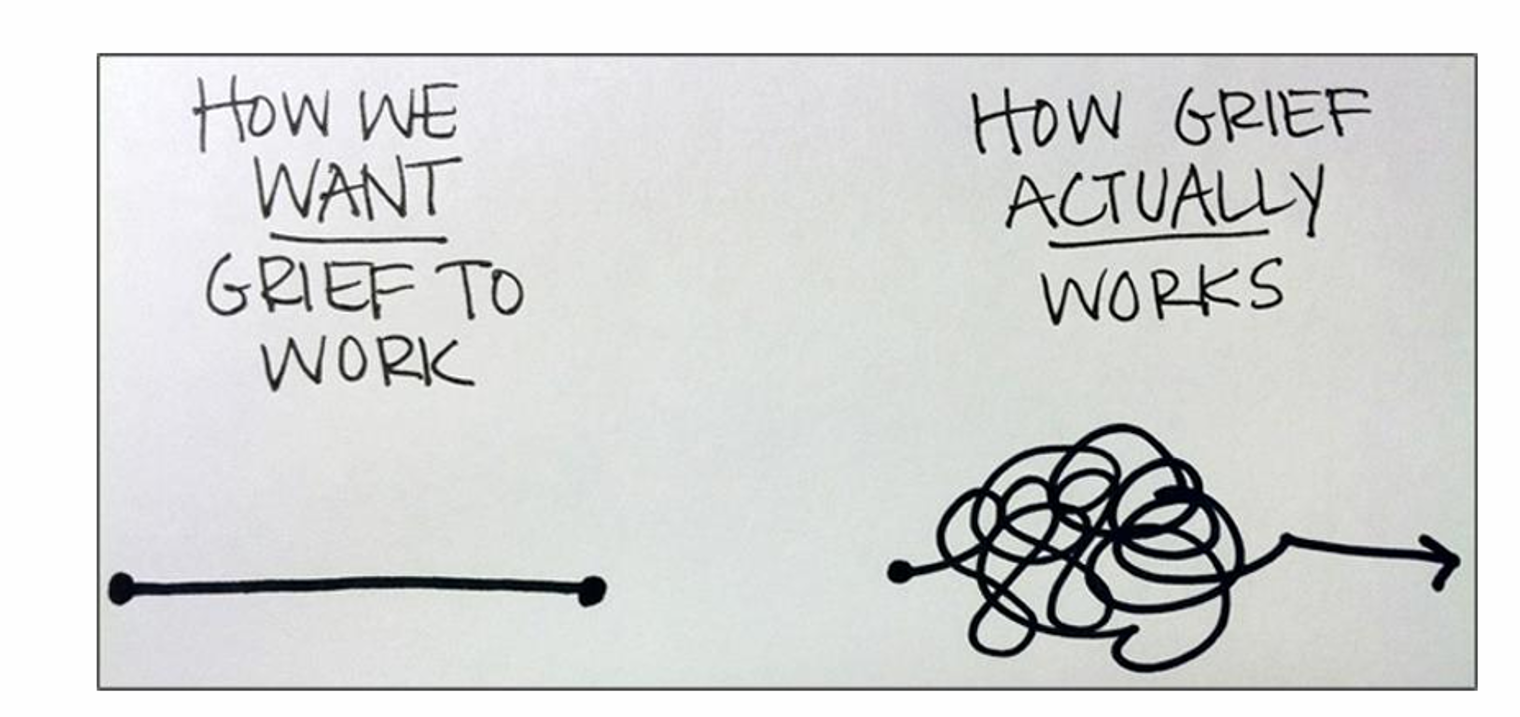
When we’re in the depths of grief, we can feel overwhelmed, unsteady, and rocked by deep emotion. It’s therefore understandable that one of the most common questions I get as a grief therapist is, “when will I feel better?” The answer can be unsatisfying because grief is not linear and there are no stages of grief (contrary to outdated “stages” espoused by Dr. Kubler-Ross). Rather, we each have a unique grief journey and while we ultimately learn to incorporate death and loss into a meaningful life, our grief never ends because our connection with our loved ones never ends. Having said all of this, people will feel “better” over time as they discover a balance between grieving their loss and living a fulfilling life.
The Importance of Continuing Bonds
It all begins with an idea.
The Continuing Bonds Theory tells us that staying connected with a loved one after death can be a healthy way to grieve. The most common experiences reflecting continuing bonds include: (1) dreams about our loved one; (2) feeling the presence of tour loved one; (3) experiencing profound coincidences; and (4) talking about or to our loved one. There are a number of ways we can connect with our loved ones including rituals and memorials, engaging in spiritual or religious beliefs, and through the use of physical objects that remind us of our loved.
Grief is not something you have to figure out on your own. If you're in the thick of it right now — exhausted, overwhelmed, or just unsure what you're even feeling — I'd be honored to sit with you in it. Reach out for a free 15-minute consultation. Let's talk.
