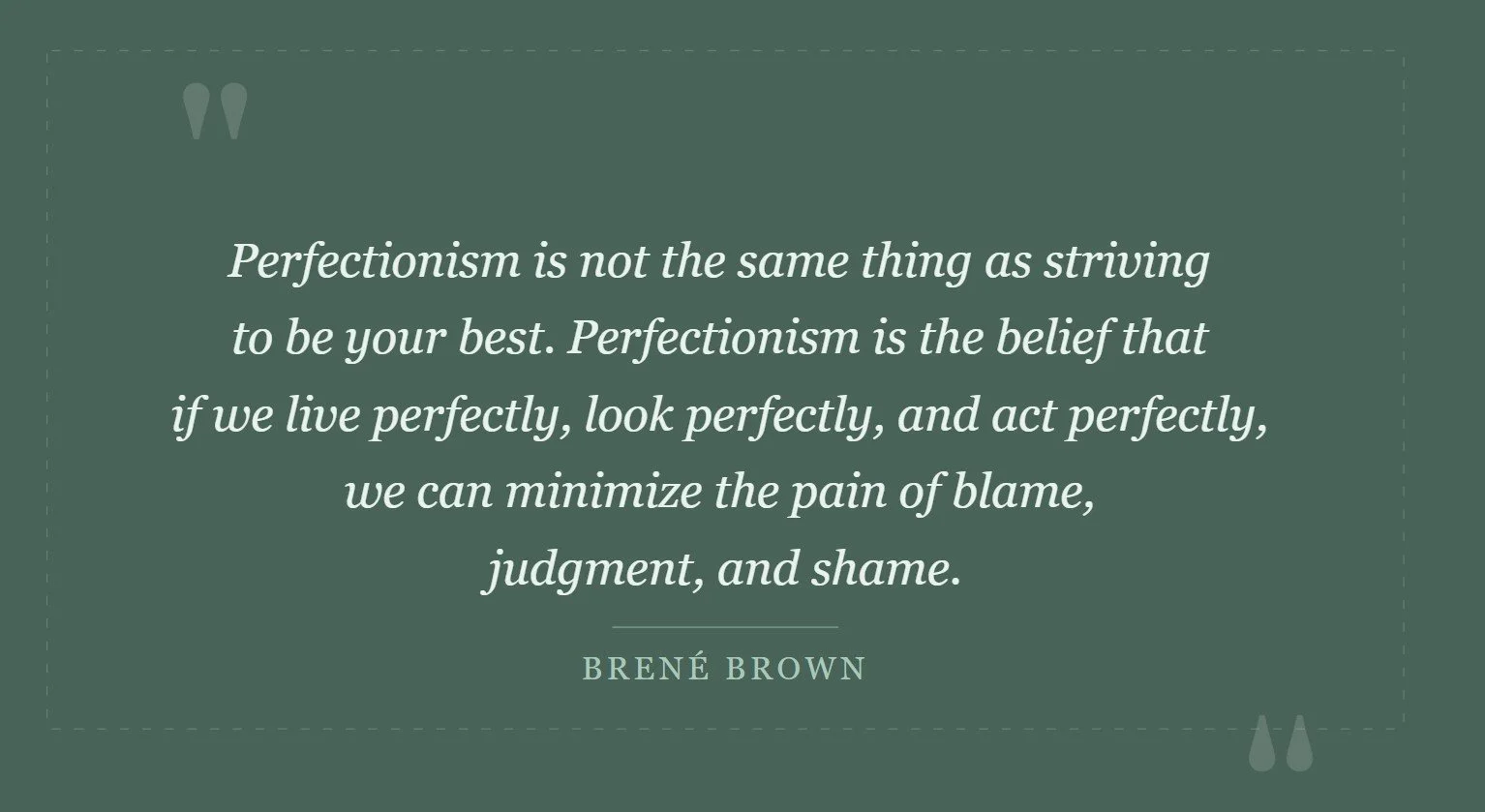
The Exhausting Math of Perfectionism: Why You're Always Behind Even When You're Ahead
There is a particular kind of exhaustion that has nothing to do with how much you've accomplished. You finish the project. You get the good review. You cross the last item off the list. And then, almost immediately, your mind pivots — not to satisfaction, but to the audit. What could have been sharper? What did I miss? What would it have looked like if I'd started earlier, tried harder, cared more?
This is the exhausting math of perfectionism: no matter what you produce, the numbers never quite add up.
The Moving Goalpost
Psychologists have a name for what happens in the moment after a perfectionist finishes something: contingent self-worth. The idea is that for people who struggle with perfectionism, their sense of value isn't stable — it's perpetually tied to the next performance. Complete one task, and rather than registering a moment of genuine satisfaction, the goalpost simply moves.
This isn't stubbornness or ingratitude. It is, in many ways, how perfectionism was designed to work. Researcher Dr. Gordon Flett has described perfectionism as a system built on the premise that you are only as good as your last output — which means that any completed output immediately becomes last, and therefore no longer enough.
The result is a psychological loop that is nearly impossible to win. The finish line exists only long enough to become the new starting line.
Why the Brain Can't Settle
Drawing from a neuroscience perspective, this experience has a name: the reward prediction error. When we complete something meaningful, the brain's dopamine system is supposed to provide a brief signal of satisfaction. In the perfectionist's brain, the anticipated reward — the "good enough" standard — is set so high that the completion rarely triggers it. The brain registers not a reward, but a shortfall, and immediately redirects attention toward the gap.
What this means, practically, is that perfectionists are often working harder than anyone around them and feeling worse for it. The effort is real. The achievement is real. But the internal experience is one of chronic deficiency.
This is not a character flaw. It is a pattern — and patterns can be changed.
The "Should Have" Spiral
One of the clearest signs of this loop is the post-completion debrief that perfectionists conduct almost automatically. You finish a presentation and walk out of the room already cataloguing the slide you wish you'd revised. You send an email and immediately notice the sentence that could have been cleaner. You have a difficult conversation and spend the rest of the day reconstructing it, line by line, for a better outcome you can no longer reach.
Cognitive behavioral therapists refer to this as post-event processing — a tendency to mentally review completed events through a critical lens, emphasizing what went wrong and minimizing what went right. Research consistently shows that this kind of rumination doesn't improve future performance; it primarily increases anxiety and deepens self-doubt.
In other words, the debrief feels productive. It almost never is.
The Cost of Always Being "Almost There"
When the goalpost is always moving, you never actually arrive anywhere. And the cost of that relentless forward-leaning is significant.
Relationships suffer when the people around you sense that their effort — and yours — is never quite enough. Creative work suffers when the fear of the post-completion debrief makes starting feel dangerous. And perhaps most quietly devastating, your sense of identity suffers: if your worth is always contingent on the next thing, there is no stable ground beneath you.
Dr. Kristin Neff's research on self-compassion speaks directly to this. She has found that people who treat themselves with warmth and kindness after a setback or an imperfect performance are more resilient, not less — more likely to try again, not less motivated. The inner critic, for all its noise about raising standards, is in fact raising anxiety and lowering the capacity for genuine growth.
Toward a Different Kind of Accounting
If the perfectionist's math is always yielding a deficit, the work is not to lower your standards — it is to change the equation.
Notice the pivot. When you finish something and feel the pull toward the debrief, pause and name it: "I am doing the thing where I immediately look for what's wrong." That moment of naming — what therapists call defusion in Acceptance and Commitment Therapy — creates just enough distance to choose a different response.
Acknowledge completion as its own category. Not "it's good enough, I suppose," but a genuine recognition that you finished something, and finishing is a real accomplishment with real value. For many perfectionists, this feels almost embarrassingly simple. That discomfort is worth sitting with.
Set the terms of "done" in advance. Before you begin a project, decide what "complete" means. Write it down if it helps. When you reach that standard, completion is the verdict — not a provisional state pending further review.
Distinguish between reflection and rumination. Healthy reflection asks: What would I carry forward? Rumination asks: What does this say about whether I am enough? One is useful. The other is the loop.
A Note on Perfectionism and Grief
For those navigating grief alongside perfectionism — and there are many — this loop can take on an especially painful dimension. Perfectionists often apply the same relentless audit to their mourning: wondering if they are grieving correctly, enough, or in the right way. They may replay conversations with the person who died, cataloguing words they wish they had said and things they wish they had done differently. This shows up especially sharply at work, where grief and performance pressure collide directly.
If this resonates, please know that grief is not a performance to be evaluated. There is no standard you are failing to meet. And the love underneath all of that self-scrutiny — the love that made you want to do things right — is not something that needed to be earned in the first place.
The goal isn't perfection. It never was. The goal is a life you can actually inhabit while you're living it.