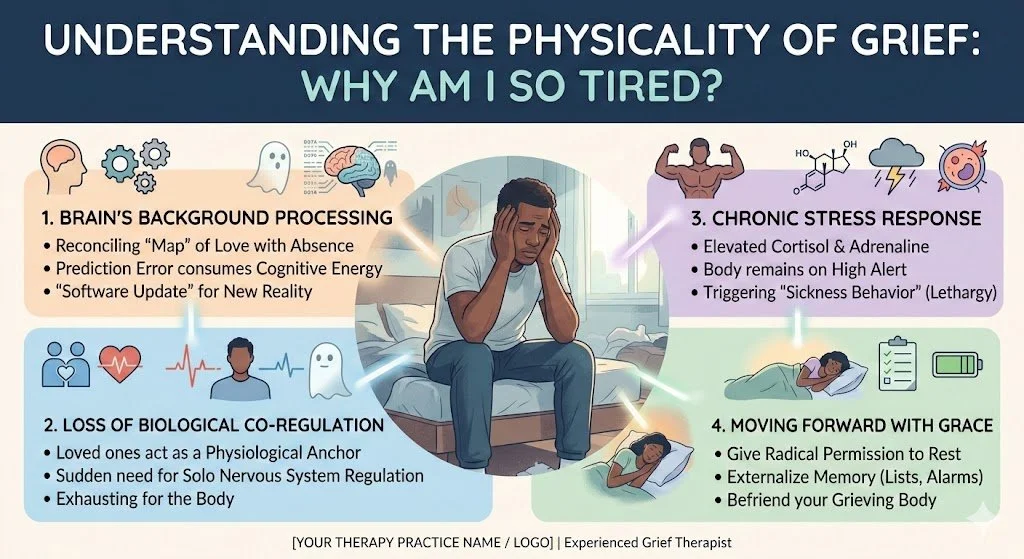
Why Am I So Tired? Understanding the Physicality of Grief
If you are grieving, you likely expected the tears, the longing, and the occasional flash of anger. What many people are unprepared for, however, is the bone-deep, soul-crushing exhaustion. You might find that walking to the mailbox feels like running a marathon, or that a simple decision—like what to have for dinner—leaves you needing a two-hour nap.
This isn't laziness. It isn't a lack of "resilience." It is a physiological reality.
The Brain’s Background Processing
The primary reason you are so tired is that your brain is performing a massive "remapping" project. We build our lives around the people we love; they are literal coordinates in our mental map of the world. When a death occurs, your brain is forced to reconcile two conflicting pieces of data: the deep-seated knowledge that the person belongs here, and the new, traumatic reality of their absence.
This creates a massive "prediction error" that your brain is trying to solve 24/7. It is the mental equivalent of running a heavy software update in the background while trying to navigate your daily life. It consumes a tremendous amount of glucose and mental energy, leaving very little left for your physical self.
The Loss of a Biological Anchor
We are social creatures, and in close relationships, our bodies actually "co-regulate." We often subconsciously synchronize our heart rates, sleep cycles, and stress levels with those we love. They act as a biological anchor. When that person is gone, your nervous system suddenly loses its partner. You are now forced to regulate your own physical and emotional responses entirely on your own—a task that was previously shared. This "solo-regulation" is exhausting.
The Stress Response
Grief keeps the body in a state of high alert. Your endocrine system pumps out cortisol and adrenaline as if you are in physical danger. Over time, this chronic "fight or flight" state leads to an inevitable crash. Furthermore, grief increases inflammation in the body, triggering what psychologists call "sickness behavior"—the same lethargy and desire to withdraw that you feel when fighting a severe flu.
Moving Forward
The best way to manage this fatigue is through self-permission. If you are tired, it is because your body is doing the invisible, heavy lifting of integration.
Externalize your memory: Use lists and alarms so your brain doesn't have to work to remember.
Lower the bar: Accomplishing one small task is a victory.
Listen to the "No": It is okay to decline social invitations to protect your energy.
Grief is a marathon, not a sprint. Right now, your body is asking for the grace to rest while it learns a new way to exist in the world.
If what you've read here resonates, you don't have to keep navigating this alone. I offer a free 15-minute consultation so we can talk about what you're carrying and whether grief therapy might help. There's no pressure and no commitment — just a conversation. Schedule here.