Why Being in Nature Is Not Just a Nice Idea
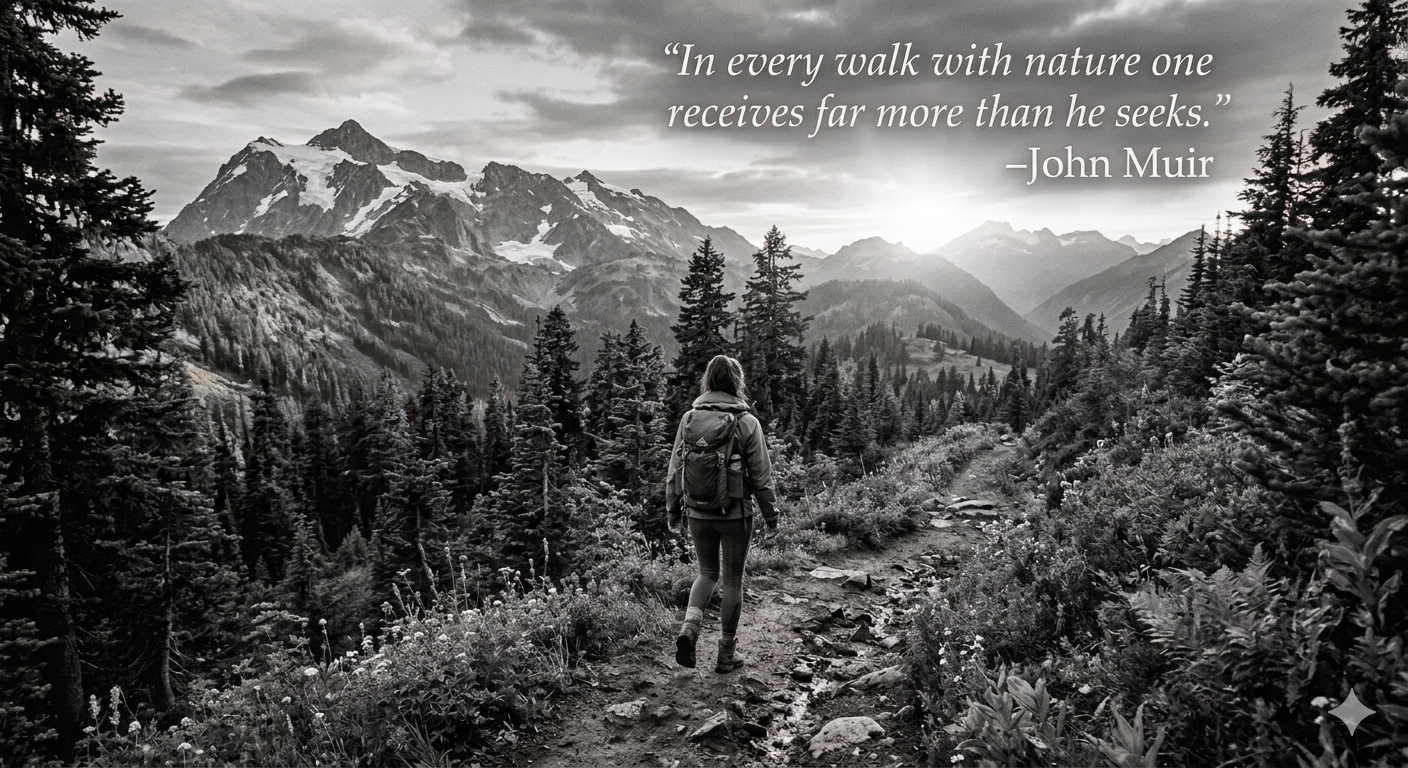
There is a particular kind of relief that happens when you step outside, especially when the air is cool and the light is soft and the noise of the day falls away for a moment. Most of us have felt it. We tend to chalk it up to a break from routine, or simply the pleasure of fresh air. But what is actually happening when we spend time in nature goes considerably deeper than that.
Time outdoors does something real to the mind and body. Clinicians and researchers are increasingly treating time in nature not as a pleasant suggestion but as a legitimate intervention, one that produces measurable improvements in psychological well-being and measurable reductions in burnout and stress. Nature, it turns out, is doing something we have only recently begun to understand.
What Nature Actually Does
When we step into a natural setting, something in the nervous system shifts. The relentless mental noise of daily life, the to-do lists, the replaying of conversations, the anticipatory dread, begins to quiet. There is something about the sensory richness of the natural world, the texture of bark, the sound of water, the movement of light through leaves, that draws the mind out of its interior loops and anchors it, briefly, in the present.
This is not a soft or sentimental claim. Clinicians working in structured nature-based therapy settings have documented improvements in psychological well-being that persist long after the formal treatment ends. The benefits are not a temporary lift. They tend to hold.
What also emerges from this work is something less expected: a renewed sense of purpose and autonomy. People who spend time tending growing things, even something as simple as a seedling or a small garden plot, report feeling like active agents in the world rather than passive sufferers within it. Caring for something alive, something that needs you, has a way of quietly recalibrating how we see ourselves.
Nature and the Grief
Grief tends to narrow the world. The couch, the bedroom, the kitchen. The same rooms, the same thoughts, the same loop of memory and longing. Getting outside does not solve any of that. It does not fill the absence or move the timeline forward. But what nature offers is something grief often lacks: spaciousness.
There is something about the scale of the natural world that gently reorganizes our sense of proportion, not by diminishing the loss, but by placing it inside something larger. The grief is still there. But it is held differently when you are standing under a wide sky or listening to water move over rock. The world goes on, not in a way that dismisses your pain, but in a way that makes a little more room for it.
Nature also offers something important for those carrying anxiety alongside grief: a place with nothing to perform. No one to update, no progress to demonstrate, no correct way to be. The trees do not care how well you are grieving. That absence of evaluation, even a brief one, can feel like the first full breath in a long time.
The Body Remembers What the Mind Forgets
One of the quieter benefits of time in nature is what it does for informal mindfulness. Not the structured, sit-down-and-breathe kind, but the more ordinary variety that happens when you are simply moving through the world and paying some gentle attention to it.
A walk in a forest, a slow wander through a garden, a few minutes sitting outside without a phone in hand: these create a kind of low-demand awareness that our indoor, screen-filled lives rarely allow. And in that awareness, something useful tends to happen. Negative thought patterns become more visible, not because we are working hard to identify them, but because the natural world gives the mind just enough to attend to that the loops lose their grip.
This is why so many people report that they think more clearly outside. It is not just the movement or the air. It is that the body is doing something and the surroundings are offering something and the relentless interior monologue, just for a moment, steps aside.
Where to Begin
None of this requires a formal program, a trail map, or an ambitious plan. It requires very little, actually.
A walk in a neighborhood park counts. Sitting near water counts. Tending a few plants on a porch or a windowsill counts. The key is to slow down enough to arrive where you actually are, to let the senses lead rather than the task list. The point is not to exercise or accomplish something. It is to give yourself a few minutes in a place that does not require anything of you, where something living is simply going about its work, and you are welcome to watch.
If you are grieving, I would not tell you that going outside will fix anything. What I would say is this: your nervous system is not indifferent to the natural world. The relief you feel when the air is cool and the light is soft is not a coincidence. It is, in some sense, what you were built for. And on the hard days, that is worth remembering.
Grief is not something you have to figure out on your own. If you're in the thick of it right now — exhausted, overwhelmed, or just unsure what you're even feeling — I'd be honored to sit with you in it. Reach out for a free 15-minute consultation. Let's talk.
