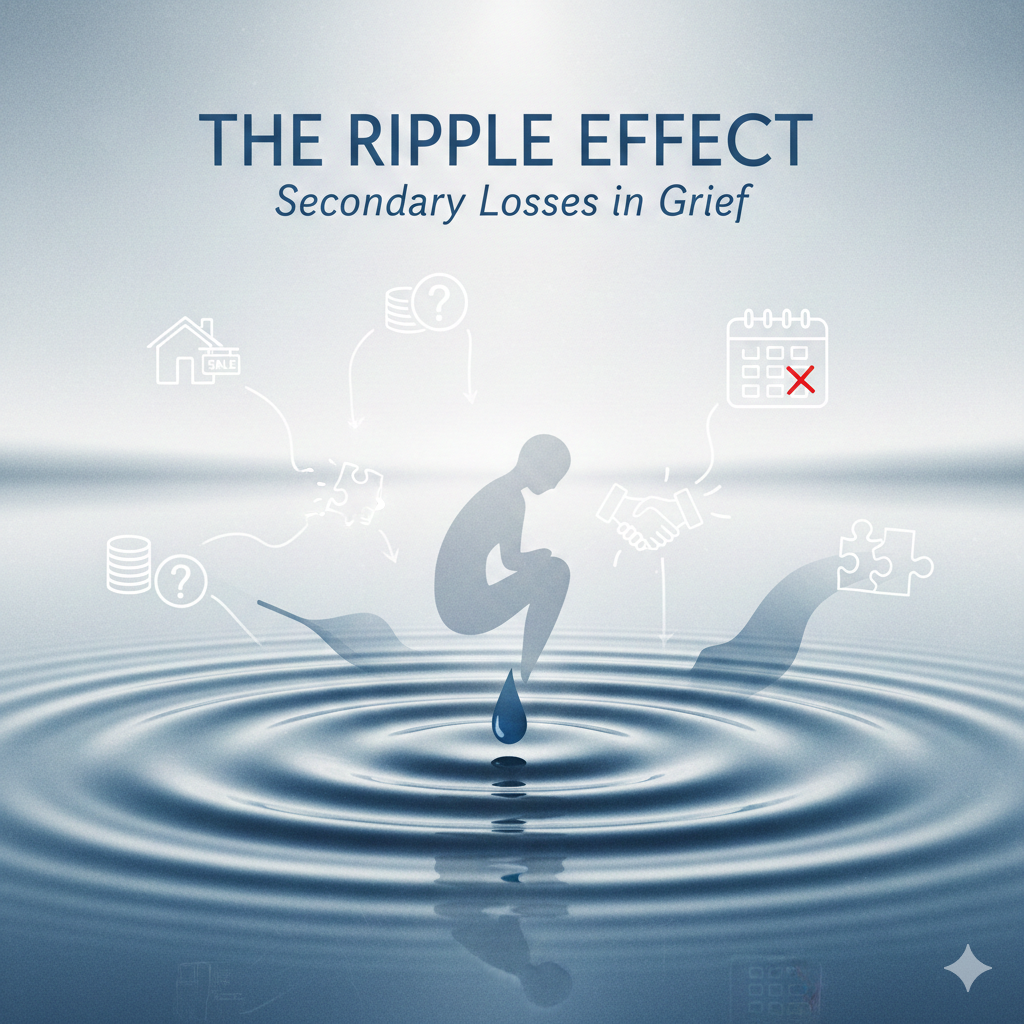
The Ripple Effect: Understanding Secondary Losses in Grief
When we talk about grief, the primary loss—the death itself—is immediately obvious. However, the profound impact of grief is often magnified by what we call secondary losses. These are the non-death related losses that ripple out from the primary loss, fundamentally affecting our lives in a myriad of ways.
What are Secondary Losses?
A secondary loss is the loss of tangible or intangible elements of life that were connected to the deceased or their role. These can include:
Loss of Identity: The deceased may have been a spouse, a parent, a close friend, or a caretaker. When they are gone, the survivor loses the corresponding role: "spouse," "parent," "caregiver," or "friend." This may force a painful reconstruction of self.
Loss of Financial Security or Lifestyle: The income, insurance, or general financial contribution of the deceased can vanish, leading to stress and significant changes in how the survivor must live.
Loss of Social Circle or Support: Friendships maintained through the loved one may fade. Shared activities, traditions, and routines—like Saturday morning coffee or holiday planning—cease. We may feel like the proverbial “third wheel” and no longer belong. Further, deaths may affect familial relationships, increasing emotional intensity and conflict.
Loss of Dreams and Future Plans: The shared future the grieving person envisioned—retirement, a child's graduation, a special trip—is suddenly unattainable.
Loss of Trust: The death of a loved one can often challenge our worldview and shatter our beliefs that life is predictable or fair. We may feel unsafe in the world, become hypervigilant, and question relationships and support systems.
Acknowledging these losses is a crucial step towards coping with loss. As we cope, we integrate our grief and restore our capacity for well-being. Ultimately, this allows us to see possibilities for a promising future and navigate a life that is meaningful to us.