What Is Grief Integration? A Plain-Language Guide to the Term Therapists Use Instead of "Moving On"
If you have spent any time in grief therapy, or read anything about loss in the past decade, you have probably encountered the phrase grief integration. It shows up in books, in clinical handouts, in the language therapists use. But what does it actually mean? And why do grief counselors keep using it instead of the more familiar language of "healing" or "moving on"?
This post is an attempt to answer those questions plainly, because the concept matters. Understanding it can genuinely change how you relate to your own grief.
Why "Moving On" Falls Short
The cultural script for grief is familiar: you feel the loss, you work through it, and eventually you move on. The grief recedes. Life returns to something like normal.
The problem is that this script doesn't match what most people actually experience. For the vast majority of bereaved people, the loss doesn't recede. The person who died doesn't become less important. The relationship doesn't fade into the background. And for many grievers, the expectation that it should (that this is what "healthy" grief looks like) becomes its own source of shame and confusion.
Am I stuck? Is something wrong with me? Why haven't I moved on yet?
The concept of grief integration offers a different and, I would argue, more honest framework.
What Integration Actually Means
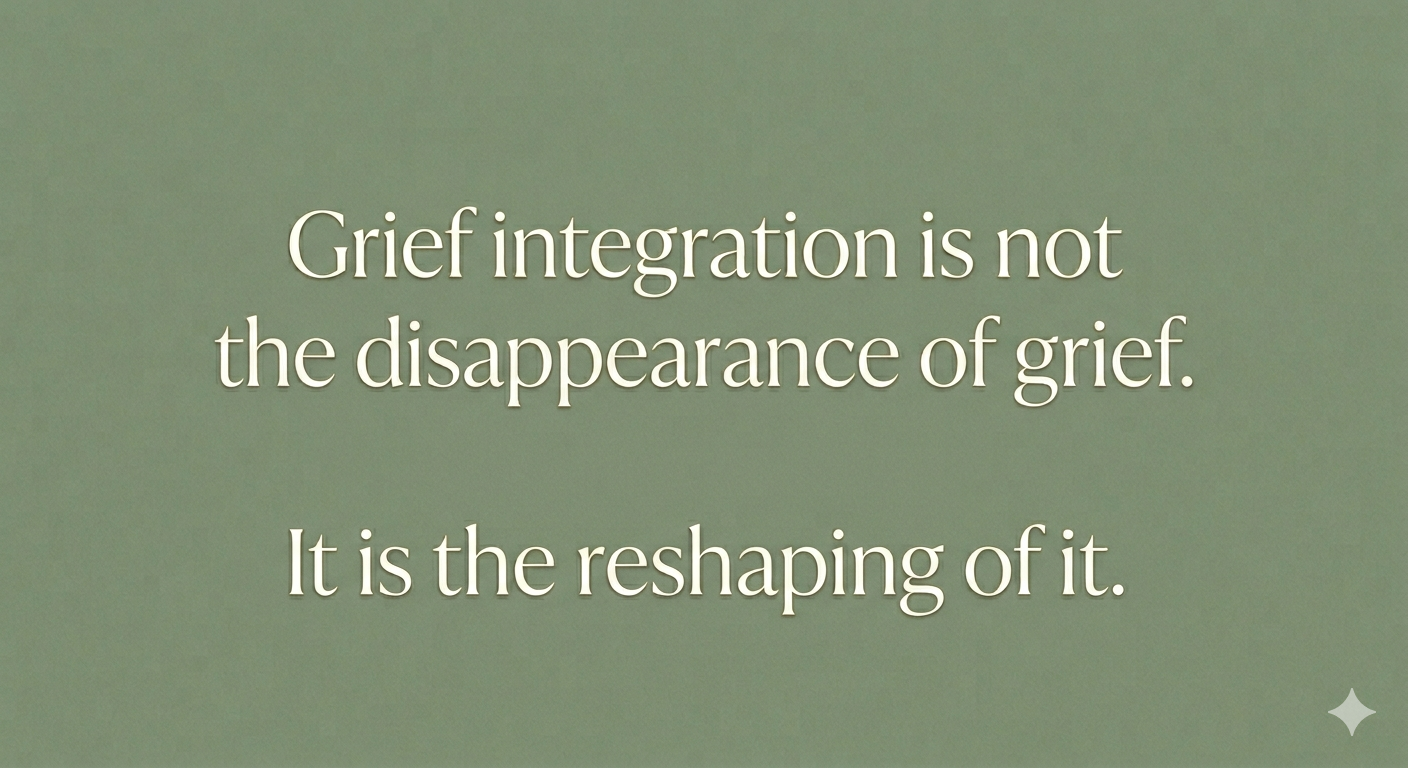
Grief integration is not the disappearance of grief. It is the reshaping of it.
Dr. M. Katherine Shear of the Columbia Center for Complicated Grief, one of the leading researchers in this field, describes it this way: grief begins as an acute experience, intense, disruptive, and all-consuming. Over time, through a natural mourning process, that acute grief is gradually reshaped into something quieter. It doesn't vanish, but it becomes woven into the fabric of a person's daily life rather than dominating it.
Integrated grief, in Shear's framework, is grief that allows you to remember and honor the person you lost without that grief continually derailing your ability to function and find meaning. The loss remains real and present. The love remains real and present. But the pain no longer occupies every room.
Think of it this way: in the early days of loss, grief is the whole house. Integration is the process by which your life (your capacity for joy, connection, and purpose) slowly grows larger around it, until grief becomes one room among many rather than the only room you can inhabit.
What the Mourning Process Involves
Integration doesn't happen passively, and it doesn't happen on a schedule. But research suggests that certain things tend to support it.
One is “dosing”: the natural rhythm of moving toward grief and then away from it. Bereaved people instinctively learn to spend time with their pain, and then let their minds turn toward something else, and then return. This isn't avoidance. It's regulation. It's the mind's way of managing what would otherwise be an unbearable continuous exposure to loss.
Another is “continuing bonds”: the gradual discovery that a relationship with someone who has died doesn't have to end; it simply changes form. Memories, values, rituals, and a felt sense of connection can all become ways of maintaining a relationship with someone who is gone. This is not denial. It is one of the most natural and healthy aspects of mourning.
Integration also involves adjusting to the practical and identity-level changes that loss creates, many of which are losses in their own right. Who are you now? What does your daily life look like without this person in it? These questions don't have fast answers, but sitting with them, and slowly finding new answers, is part of how integration happens.
Integration Is Not the Same as "Getting Over It"
This distinction matters enormously, and it is worth saying plainly: integrated grief is not resolved grief. You do not stop loving the person. You do not stop missing them. Grief integrated into your life is still grief.
What changes is the relationship between your grief and your life. Early in loss, grief tends to crowd everything else out. Over time, for most people, life gradually reclaims space alongside the grief. The two coexist. You can hold both the weight of the loss and moments of genuine happiness, connection, and even joy. Not because the loss has become less real, but because you have grown larger around it.
When Integration Doesn't Happen
For some people, the natural mourning process stalls. Grief researchers sometimes call this “complicated grief” or, in clinical language, Prolonged Grief Disorder: a state in which acute grief persists long past the point where integration would typically have begun. If you feel genuinely stuck, if the pain remains as raw and disorienting as it was in the earliest days of your loss, that is worth paying attention to. It is not a character flaw, and it is not permanent. It may be a signal that some additional support could help.
A Final Thought
You will never "get over" the death of someone you loved. You aren’t supposed to. Integration is not about leaving them behind. It is about learning to carry them with you, in memory, in love, in the values and habits and ways of being they shaped in you, while also stepping back into your own life.
That is not moving on. That is moving forward. And there is a profound difference.
If you are struggling with grief and wondering whether what you are experiencing is typical or something more, I am happy to talk. I offer grief counseling in Boulder and by telehealth throughout Colorado. You can schedule a free 15-minute consultation to see whether working together feels right.